
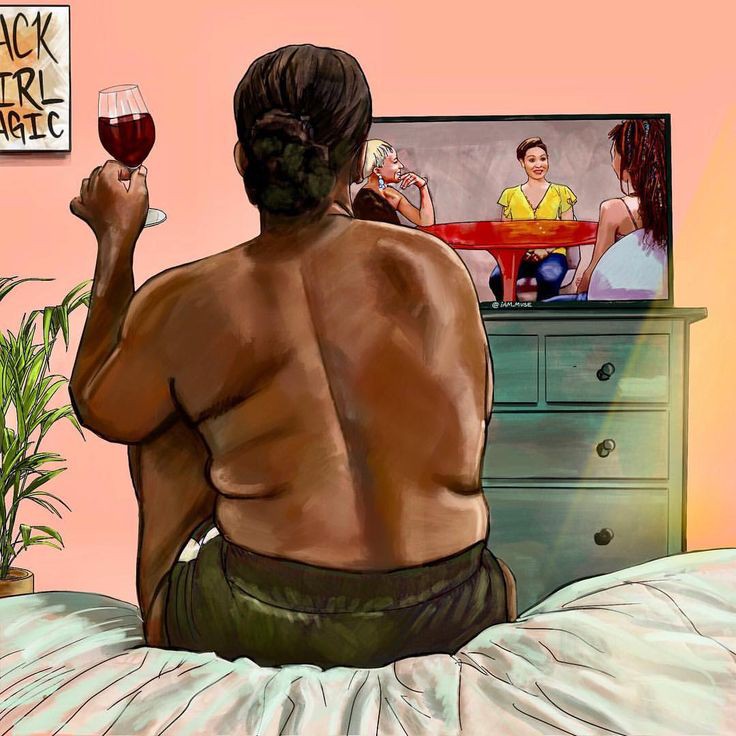
Today is the day I will finally lend my voice to paper on this discussion. Honestly, I’d have preferred a round table talk on television with the originators of this question “what do you bring to the table?”
Of course, this question can apply to every sphere of life but my flummox is largely stirred when it is raised in the romantic context.
Ideally, I do not have a problem with this statement because what it translates to is an assessment of the interested parties romantically but most times when it is raised it is usually directed at the woman because everyone just assumes that the man is the one pulling the financial weight. Oh, this is going to be a long conversation better get comfortable.
Nope, this is not a feminism rant but, I cannot promise that there is a dividing line. This question meets me at a gathering with friends, new friends with even newer ones in attendance and by some serendipity I am about to be match-made with some guy I have never met before and even as I type this I am not sure when I will meet this mystery man who before the end of the night ended up being dubbed my husband.
I engage in a conversation trying to get a mental picture of this guy, let’s call him X and I keep hearing all the good qualities he possesses and of course, I expected nothing less. The conversation shifts to extolling the quality of a good woman and in the popular Nigerian parlance, there is a mention of “wife material” (for those who do not know, this a metric used to determine how valuable a woman may be to a man measured in yards but typically involving domestic skills). Immediately, I found it necessary to interject by saying that unfortunately, I am not bringing any “wife material” because mine has been exhausted. (Don’t ask me what exhausted mine that’s an entire blog post on its own).
The next question I am then attacked with is you guessed right “what do you bring to the table?” Yup, the modern virtuous women’s anthem. I answered saying myself. She says what is yourself? I said, “me” and at that moment I realized that I have grown a lot from the validation-seeking persona I identified as previously. I had somehow tied my value as a woman to domesticity.
I felt proud of myself. First that I could talk like that almost reflexively but I was not always like this. This was what my last relationship blessed me with; the idea that I could not seek to please a man by being valuable in domestic ways, the idea that no matter how much I do for him in my estimation of “good”, it is not enough to make him see that value and treat me right. Unfortunately, people can still treat you badly despite your good intentions and even theirs.
I have been privileged to encounter women who I will blatantly say have loose morals and are not “intellectual” enough yet, hold the respect of high-value men and are treated with utmost care and gentleness and I have also seen the creme de la creme of “wife material” treated like thrash so it simply means people value what they value. It is summed up in the words “do not cast pearl to swine” I can truly break down this statement now but I think my analogy is lucid enough.
Previously, I used to hold the belief that people will treat you with the same value you place on yourself but that is usually not the case. People treat you the way they appreciate value and that appreciation may actually not be the way you value yourself or estimate that you would be valued but they can argue the contrary and they’d be correct.
The good girl conundrum plagues most women from conservative origins, the need to measure goodness based on virginity and domesticity. The ironic part is that this woman looks down on other women as not virtuous enough for men who do not even appreciate the value being preserved because does it make sense that some men will still choose a “slut” whether as a mate or as a lover, the fact that the choice can be made is already a sign that there is no SI unit. So despite this good girl politics being played, “bad girls” also get good men in fact, I dare say, they get the better lot sometimes. Do not mistake this post as an agenda against morality, faith, or virtue.
I am simply saying that love and acceptance transcend these pluralities we attach as prerequisites to be deserving of love. You are enough as you are for a person who truly wants you. No, this is also not going to be a post where toxic people can hide by simply saying “if you love me, you will accept me for who I am” but even then, relationships do not work simply because both parties are “good people” if not, people of faith should not be getting divorced. It must mean that the most important things are being detracted which is love is not transactional. YOU ARE ENOUGH.
Am I saying people should not have a preference for what they seek in a partner? That will make me hypocritical I have my list and it is quite long (laughing in Deutsch). I am simply saying dead this what do you bring to the table talk.
When it boils down to it people do not assess their partners at this table. Let’s even assume that some weirdos do, what about intangible qualities? How do you quantify assets that are not physically manifest or fiscal?
Assets like emotional quotient, mental fortitude, sagacity, insight, and foresight. What should be the fate of relationships where partners are not pulling equal financial weights? How many relationships can even boast of partners pulling equal financial weights? what should happen when both partners are pulling these weights equally, they should each own their side of the table? who then owns the entire table or is this the time you’d want to raise its partnership card? should the party pulling more financial weight feel superior and the other feel inferior? are they not contributing to the success of the relationship in the capacity they are best equipped with, is that not the hallmark of successful relationships?
The ironic thing is that in a patriarchal society, men are expected to pull most of the financial weight. Yet, the type of society we have today is hybrid patriarchy where women are doing more career-wise and are still expected to be domestic enough or competently domestic. Where they are deficient in this regard, it is blamed on feminism. Now women are financially competent, leading corporations, and climbing the career ladder and yet the expectation on domesticity has not changed and this is not even limited to home economics, I dare add, behavioural economics. The temerity that feministic ideals are drafted by whims and caprices of masculine ego.
How do these men expect the same level of respect accorded to proper patriarchs who won’t dare be found humiliated by their wives working?
To guide the trajectory of this discourse, let me recap. In my opinion, as guided by many round tables discussions participated in and observed, the what do you bring to the table talk usually often boils down to a financial weight in most conversations it is raised.
Secondly, women are often the ones at the receiving end as most women are not as financially stable (let’s not even start on the marginal pay gap between men and women in corporations as being part of the causes, let’s pretend women are just perpetually broke).
My argument then is, why is finance the most qualifying metric? what about intangibles? why is domesticity rated or lack thereof? why is it not enough to simply bring earnestness and the willingness to love till one’s lung gives out? should romantic relationships boil down to keeping tabs and maintaining superiority?
I could go on and on but I am exhausting this rant. I am sure many more conversations can be born from this and will be happy to read all about it.
Feel free to help me write the sequel to this from comments or maybe I will get my television show and people can actually call in and talk my ears off. Either way, I must bid you adieu.
Xoxo,
dcconnoisseur.

 Connoisseur of Memories
Lots to “love” (😉) in this post, but lots to discuss at a round table, too – and not only because I’m of the masculine type ☺️
LikeLiked by 1 person