
When mental health is in issue, I don’t understand why a lot of people shy away from stating its importance. In Nigeria where I am from, people surmise mental health as overrated, and that individuals who suffer a meltdown are weak. Maybe, it is an African thing.
Honestly, weakness has nothing to do with it. Since, I am not a psychologist, I will move on to discussions I am better equipped to handle.
Emotional health. Mind you, I am also not a therapist. So, this is strictly from a personal viewpoint.
I think emotional health is as vital to human life as air is. It is the ability to filter a wholesome psyche, from a dysfunctional one. To me, there is a connection between emotional health and mental health. It is more the head to heart analogy or is it heart to head?
A large percentage of individuals go through one form of disfunctionality or the other. It is often as a result of nurture or experience. Consquently, they face constant triggers that make them vulnerable to insecurity and self esteem issues.
As a paradigm, different societies embrace diverse cultural norms. Thus, affecting the context of normality and anomaly within such social construct. As such, generalizations, are formed.
I have struggled with one or more of such stereotypes. First of which is, loudness. It is widely believed that Yoruba people are loud; the cymbal kind of loud; the borderline crass and annoying type. Especially the women folk.
Secondly, Yoruba women are usually well endowed. I mean, bootylicious. Yorubas are elitist, and know how to throw great parties. The men are mostly demons, in terms of philandering and sexual prowess.
And of course, the interesting Ijebus are stingy slogan. Reflective of the economical nature of the typical Ijebu person. Yorubas like pepper; a lot, and cannot boast of varieties of delicacies, that easterners are popular for.
Following a trail of these notions, could leave one with generalized impressions, which may poorly reflect on individual distinct behavioural culture. Resulting in, the tragedy of the single story, which typically, refers, to perception based on popularly portrayed ideas not mirroring the whole.
However, as individuals, we are often quick to box people up in different categories: race, tribe, color, gender, nationality, body type, height…
Also, we easily assimilate cultural patterns in order to blend in and be accepted. Culture is not limited to already established patterns of living. It could be informal, e.g., “set awon balenciaga geng.” The marlian culture and the indaboski trend.
Accordingly, one struggles to keep up with the various imageries that should ordinarily, define one. In the event of a disparity, ostracization sets in, whether at societal instance or individually.
It also extends to gender assigned roles, metrics of what a man or woman should idealize. This, in turn result in a complex social matrix of acceptability.
For a long time, I struggled with representations of womanhood. And I’m still find it difficult to contradistinguish the emotional qualities from the physical ones. I do understand of course, that I am female; but, it’s easier for me to relate from that broader perspective than, as a woman.
The rationale being that, the benchmark of how a woman should look and feel contrasts, with the edifice I confront in the mirror daily, in person of myself. Mentally, I can decipher that I am biologically wired to, for example, push out a baby as with the nature of my sexes. Regardless, in the context of how an African woman should look, I find myself tilting towards the Asian continent and that’s a long way from home.
African women are voluptuous, black, bold and beautiful. I grew up hearing, plainly, that I needed to put on more flesh. In fact, people tell me: “when you grow up properly…” like, who I am is a shortchange of what I ought to be.
Sometimes, in a show of concern, some people ask me: “what happened?” In a manner of greeting, to emphasize that I have lost weight. The one that I don’t have in the first place.
I have been friends with people who have flagrantly dismissed my body type as inconsequential, as a touchstone for attractiveness. It was a constant jab for me. I am always “too small.”
I have been involved with someone who found a way to make snide comments to that effect. Either maliciously or otherwise, I cannot categorically say. One thing however, was certain, I cleared the person without mincing words. It went along the lines of: “I will not alter myself to please any man, if you are not okay with what you see, please, you can use the door and search for your spec.”
When I attack people with the same ferocity with which they come at me about my stature, I am labelled defensive and too serious. People easily make light of what triggers you, because it does not affect them as deeply. Yet, they expect that you will be civil about it and rein it all in.
Well, I have a different modus operandi. Since I find it crude to return offensive statements; I follow the tactics of attack is the best form of defense.
In my case, I just immediately replace your negative comment with a strong positive statement right in your face. I don’t give it the opportunity to cool down so I can reflect on it.
I have done this a long time now, that, I am now, an expert, at eliminating toxicity with equanimity.
Taking charge of one’s emotions is an empowering stance. Denying them, glossing over them, or being equivocal about them, is damaging. It starts by refusing to accept any form of emotional bullying however, innocuous.
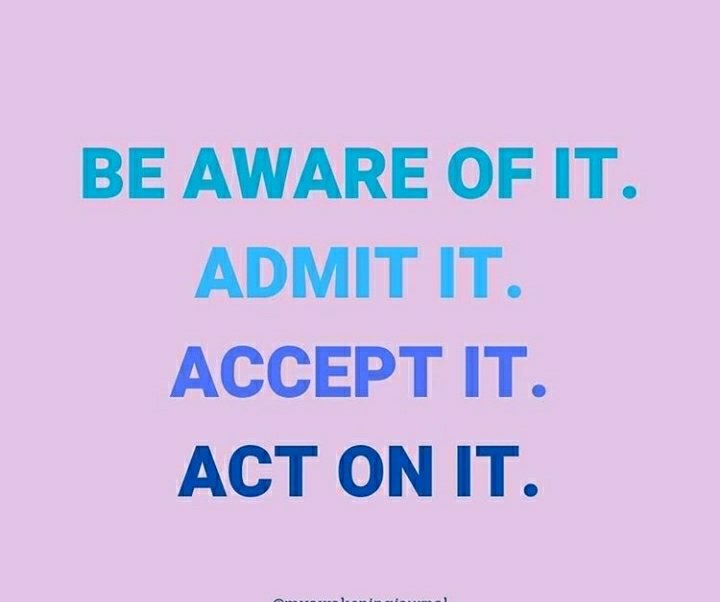
When it comes to emotional health, it can be described in many different ways: Emotional responsibility, emotional fitness, emotional quotient, emotional maturity, emotional competency…
What is noteworthy however, is understanding that you shouldn’t let any one be strong enough to project their insecurities unto you or even, make you insecure. They don’t even get a say. It also refers to accepting responsibilities for your actions, while allowing others be responsible for theirs.

Taking responsibility for one’s emotions is about asserting feelings that are wholesome to your being and silencing noxious vibes. Be quixotic about them. You cannot wait for someone else to do that for you in the name of affection or whatnot. It is not a transferable obligation; it is a debt you owe yourself. Don’t be a debtor.!


 Connoisseur of Memories
Thanks for this piece. There’s nothing like standing up for oneself, being comfortable in ones skin and loving yourself.
LikeLike