

Dear Readers,
Let’s try something different today. Languages- Spoken, written words for formulating expressions.
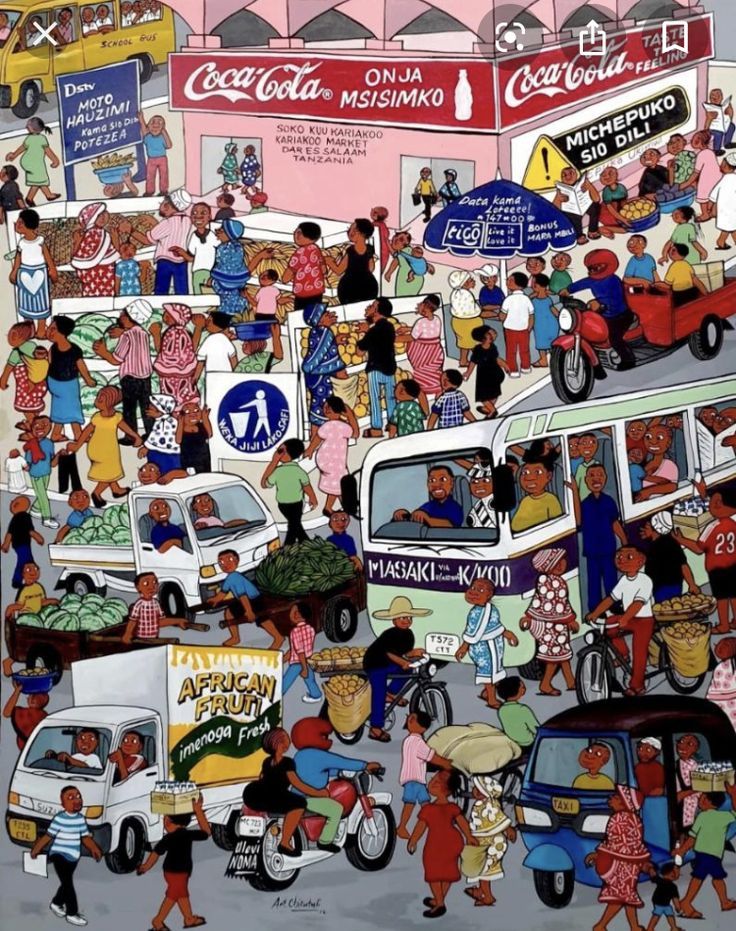
I was at work, minding my business, when a colleague segued into a conversation about the beauty of language. Actually, he sneezed, and I said “sorry” he asked why I was sorry, and it was then that it occurred to me that I transferred the reaction of my native tongue “pele” to English. For context, ‘pele’ translates in the simplest English as ” sorry, but on a deeper level, it almost feels like one is saying, I feel what you feel, even when my words cannot express the depth. At least, this is my interpretation.”
I explained this to him, and of course, it led to further questions on using different simple phrases like sorry and excuse me. I asked if he liked learning languages, and then he answered by saying he likes the thought structure of languages.
Languages are more than expressions of cultural background; they serve as evidence of the thought evolution of a people. Before my exposure to a different cultural background than my familiar origin, where there are over 250 different languages, although with English as the official language, I thought that articulation was a measure of intelligence; now I have come to understand that one can be intelligent but can be without mastery to efficiently communicate such intelligence. Dexterity with language is one means to convey clarity and reduce misinterpretation.
To elucidate, I can hold my own in English, but I am not sure if I could express my thoughts fluently in my native Yoruba dialect. First, I may actually stumble through the words and, based on my limited vocabulary, be handicapped in unequivocal expression.
It is also like how Sofia Vergara said in Modern Family, “Do you know how smart I am in Spanish?” Inability to communicate in a certain language when that is the mode of expression in a certain place can make one feel out of place and even doubt one’s intelligence. I found that when I first moved, I found it hard to even ask simple questions because I was afraid that whatever I wanted to say would come out wrong anyway, forgetting that I had mastery of another language and could also speak in English if someone looked down on me for not being able to communicate in their language.
Sure, articulation of ideas is a skill set on its own, but sometimes, language itself serves as a weapon to aid mastery. Take the German language, for example, the structure is nothing like that of the English language; the verb sometimes comes at the end of the sentence, and there is a word for everything. If you think you know the word for a phrase in German, think again; there is a more accurate phrase.
I realised that this is because Germans typically are big on precision and efficiency. Communication to them is the need to be as accurate as humanly possible, leaving no room for misinterpretation as to the exactness.
Is it the people that influence the language or the language that influences the people?
My colleague went as far as to postulate that the structures of language and its use determine thought patterns and inevitably affect innovation and creative output. For instance, he cites that the Chinese language has approximately 50, 000 characters; even though just about 3, 500 characters are more common in education and publishing, in his opinion, this range of characters makes room for innovation. I think central to his idea is that since there is a plethora of options, you become innovative with combinations, and this may account for the high entrepreneurial output. In the same vein, since the German language is more mechanical, it makes sense that there is a higher number of engineering/ constructive tendencies…
To take it a step further, in the fourth Industrial revolution which we currently reside, there is the emergence of programming language. So language is not just about expressing ideas, it is also about grouping and identification, thought methodology, if I dare say.
One interesting thing I have found out, which may be basic, but is interesting to me, is how people can build personas around their use of a language, especially one they have gained ascendancy. I found this out when I overheard a conversation of an acquaintance in German versus how he normally speaks in English.
In English, his intonations are high-pitched; he almost sounds like sunshine. In German, it almost seems as if he is speaking in baritone. and with decisive authority. I found the contrast jeering at first, till I observed more closely that this switch was based on familiarity and use. German was his mother’s tongue. I remember someone saying, ‘your mother’s tongue is the language you think in,’ which would make me English because I barely speak Yoruba in my mind.

There is also the issue of asymmetric intelligibility. That is, two languages are considered partially mutually intelligible, but one group of speakers may have more difficulty understanding the other language and vice versa.
Take, for example, the similarities between Romanian and Italian text, the similarities between Dutch and German, Portuguese and Spanish. I also heard that the Estonian language does not make provisions for differences in gender. Basically, there is gender neutrality in communication. Largely, understanding a language can be shaped by social, historical, and linguistic factors. In essence, predominance, proximity, and assimilation.
Being able to speak a language provides a certain form of access, to some degree, a level of acceptance and, where necessary, identity and belonging.
More than structure, grammar, tenses and vocabulary, the most intrinsic element to language is understanding and comprehension and even when all the words come out wrong, intent can be perceived accurately and vice versa. More than vocal expressions through words, actions of acceptance and belonging through love and kindness can never be replaced by verbosity or garrulousness, and that is why you can feel understood in silence.
I think in the end, language starts from the heart.
Xoxo,
Dcconnoisseur.

 Connoisseur of Memories