

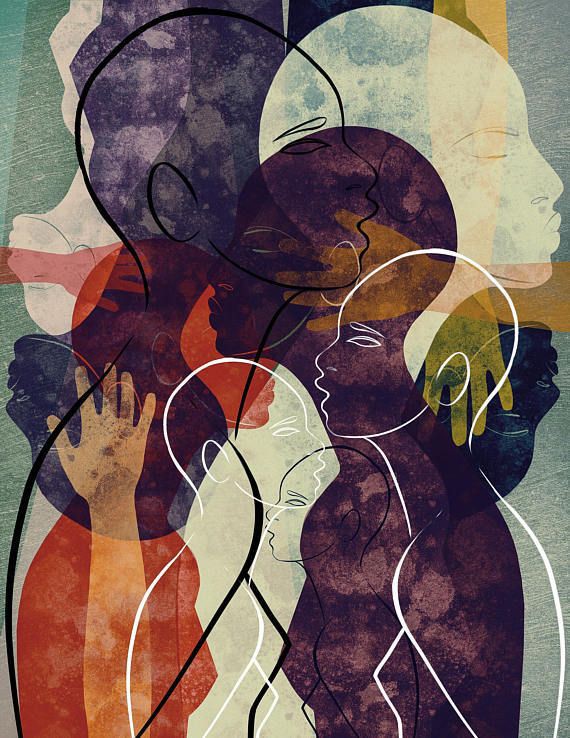
The interesting thing about meeting people is that there is no one way to meet people even though there can be common denominators like on a trip, at work, in public transportation, at school, at a place of worship, in a pub or at a carnival. You already know where I am going with this but this is just a diversion.
Instead, my interest lies in sharing perspective on how those encounters metamorphose into something unpredictable, the efficacy of spoken words that eventually lead to memories and connections that may last a lifetime or a short while but are potent enough to carry us through a lifetime.
As I write this, it is dawn and I had been carrying on a conversation with a person I cannot exactly call my friend but is more than an acquaintance is there a nomenclature for this type of category? I met this person online through mutual connections but the thing is I never intended to meet this person in the way that our relationship is fast evolving. When I made a move to connect with this person it was merely cursory. I did not think it will progress past pleasantries and acknowledgement of each other’s existence and the next thing I know we are exchanging ideas and sharing bants in a way that still allows us to be perfect strangers and yet share intimacy.
I can say I know this person without the actual components that make up the typical knowledge of what people mean when they say they know a person or am I tripping here? Hold on, this is what I mean. I think the only part of this person I have met is the mind, the mind expressed and portrayed, I have been privy to some thoughts provoked by our conversations but this is merely a mirror or an x-ray of a larger part. I do not know any more about this person than is common knowledge and yet I know as much as I can brag about some sort of deep connection.
Do we ever truly know people even when we say we know them? Is it not the case that we know the parts of them we chance upon or gravitate towards or the parts of them we evoke? Unfortunately, this is true even when we are in proximity to them. Having familial bonds or lack thereof does not magnify the potency of this knowledge.
Proximity does not equal intimacy or knowledge. Many parents do not know their children even when they think they do. More often than not, what happens is a projection of expected values that they rationalize the child must have imbibed as an essential trait based on family values and identity. At other times, it is simply because there is a part of the child that they should never be privy to, for example, sexuality- but that sexual personality is also an existential part of what makes up the child’s identity. Note, I am not making reference to sexual Identity or preference here but the actual exploration of amorous desires.
This is the very idea I intend to communicate, knowing a person is a privilege and there is no one way to claim that knowledge but there are definitely levels to it in the same way that one studies a course and then goes on to specialize. Sometimes in getting to know a person, the specialty is the actual course you would be privy to because so many other doors to full knowledge of that person will be locked and this may not be for lack of trying it may also be attributed to the fact that people are not often an open book even when they seem to open their pages to be turned.
I think this is why intimate relationships are profound. It could never get boring if exploration is the drive but we often stop at complacency and familiarity that it becomes hard to keep making novel discoveries.
It may not be helped because we desire some form of control and that is only possible when we know what to expect. When we do not, or when what we know does not conform to what we see, we spiral, get disappointed, and heartbroken because our expectations of them do not match the reality they present.
The other aspect to this is that even the people we claim to know may not in fact know themselves and may even be as surprised as us when we make certain discoveries because they also are being presented with this perspective of themselves for the first time, as they are also meandering through uncertainties.
The other angle is the phase we meet a person. Using a biblical analogy, the thief on the right hand of Jesus met a saviour in the same state as himself. Jesus met a man in need of redemption he could provide. For the two of them, there must have been limited perspective. All the people that encountered Jesus prior to the cross must have had a different perception of the efficacy of his redemptive power compared to those meeting him on the cross. For the thief, no one who had met him previously would have considered that he could be redeemed until Jesus. Their perception of him would simply have been shaped by their projections about his likely end and for the thief, he may never even have considered himself in need of redemption or deserving of it.
In another light when we watch people enter into our lives even in interesting unpredictable ways, there is still a journey to glimpse from their exit. Some people intended to stay but may stray, some people were supposed to be temporary but become essential enough to lead to permanence, some others we meet may just be sojourners who intersect our path, meeting some people is serendipitous, while some others are best described to be conduits for other people we are to meet.
The way these people leave may not be as gently as they entered and the ones who entered most chaotically may be the kindest of souls. The sore point is usually when we are not ready to release them when they are ready to go or that we never planned to release them at all from our lives we would rather that they were enslaved to us. It is especially difficult when we seek to make permanent what was meant to be temporary but yet too undiscerning to see.
I read somewhere this phrase “contrary to the obvious, we do not see with our eyes but our understanding.” I think this is true for our knowledge of people too. Is it possible that we see them from the lens of our experiences and not as they are? is it possible that we knit-pick what we see and simply look to see what we are looking for and not exactly the whole? what if it is not even possible to see the whole?
Can we find contentment in what we know or is it our need for possession that robs us of this benefit?
Regardless of what answer you choose or the perception you mold, the thematic idea here is that there should be humility in discovering people, that they are often borrowed no matter how long they stay, and that they can never be owned no matter how attached we get to them, that they are full of surprises whether it be good or bad, that we have no control over the events but we can seek contentment from the experiences or the lessons.
No relationship is stagnant and if only we can enjoy the merry-go-round maybe then these uncertainties will not be as hard to accept, maybe it is not about classifying them as good or bad, toxic or healthy, best friends or acquaintances, lovers or partners.
Just may be they are the people in our lives filling the spaces we create.

 Connoisseur of Memories
You’ve returned to excellency 🎉 A thought-provoking, wonderfully articulate piece. Thank you 🙏🏽 🥰
LikeLike